
Tesla Q3 2026 Earnings Preview: What Actually Moves the Stock
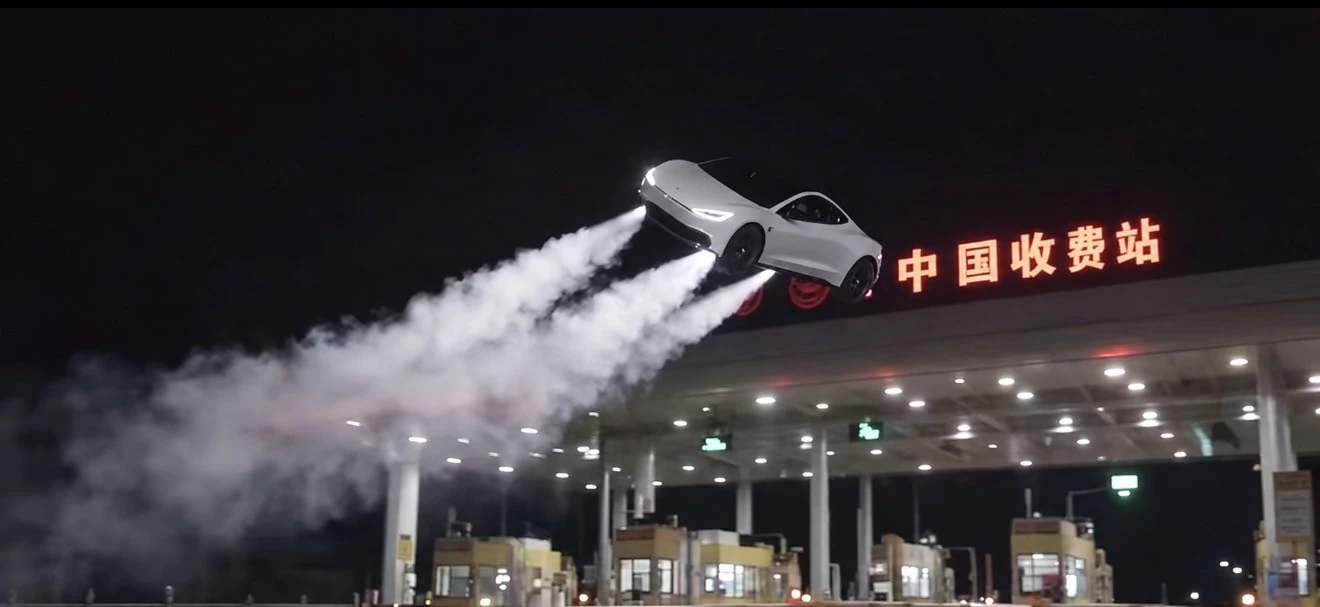
The flying Roadster is not what will reprice Tesla. It is a marketing event, not this quarter's revenue. The number that matters is the Q3 2026 report, due after the US market close on October 21, with the webcast around 5:30 p.m. Eastern (4:30 p.m. Central)—the early hours of October 22 in Beijing. Listen for whether FSD and Robotaxi get more specific, for the hard line that HW3 does not get v15, and for whether about 487,000 deliveries still earn a margin.
The Roadster is marketing, not this quarter's revenue
On October 15, Tesla unveiled the next Roadster at SpaceX's test site in McGregor, Texas: cold-gas thrusters, a reverse hill climb, and a flip in the air. The official claim is 0–60 mph in under a second, with production aimed at 2028.
Five days later, in the early hours of October 22 Beijing time, Tesla reports Q3 financial results. That is the print the market can actually price. In the US it is still the evening of October 21.
Reuters, CNBC, TechCrunch, and others described the October 15 cars as Performance, Thrust, and Rocket. Deposits sit in two rough tiers, $50,000 and $250,000. Rocket is invite-only, includes a "full flight system," and is not for ordinary road use. A 2028 production target is a long way from this quarter's income statement.
Musk has called the Roadster a "small potato" more than once: it does not move the needle on Tesla's finances. Coverage has treated the night as a Tesla–SpaceX engineering showcase and a bid to recapture attention, not as a product line that can throw off meaningful revenue now.
If you are trading the stock this week because the car can fly, you are trading a narrative premium, not Q3 cash flow.
What can actually move the stock: FSD, the hardware split, deliveries
Tesla has confirmed that Q3 results come after the US close on October 21, 2026. The management webcast is about 4:30 p.m. Central (5:30 p.m. Eastern). Deliveries are already public. What is still unknown is gross margin, operating expenses, free cash flow, and how management talks about FSD and Robotaxi.
1. FSD and Robotaxi: does the software story get specific?
Over the past few weeks, FSD (Supervised) v14.3 Lite has been rolling out to HW3 cars, on software builds around 2026.38.5. The release notes are plain: distill the v14 capability from HW4 onto HW3, and add parking, unparking, reverse, Arrival Options, and Speed Profiles.
At the same time, Tesla software trackers and comments tied to the AI lead point to the same hard boundary: HW3 does not get FSD v15, and it is unlikely to reach unsupervised driving. v15 is for HW4 and later AI chips. The Robotaxi fleet is already on a higher build. For investors, the installed base is splitting in public. An older owner's software option has to be cashed through a hardware upgrade, not through an open-ended Lite branch.
On the call, three lines are enough:
- Is the timing for Robotaxi and unsupervised driving more specific than last quarter, or still vague?
- Are there checkable operating numbers for FSD purchases, subscriptions, and intervention rates, or only another demo video?
- Is there a hardware-upgrade promise for HW3 owners with a scope, a schedule, and a cost?
2. Deliveries are already out. Volume is not the same as profit.
Tesla IR's October 2, 2026 release put Q3 production at about 464,000 vehicles and deliveries at about 487,000, including about 478,000 Model 3/Y. Energy storage deployments were 13.7 GWh.
The last four quarters make the pace easier to see:
| Quarter | Production | Deliveries |
|---|---|---|
| Q4 2025 | 434,358 | 418,227 |
| Q1 2026 | 408,386 | 358,023 |
| Q2 2026 | 451,758 | 480,126 |
| Q3 2026 | 464,391 | 486,532 |
(Production and deliveries are from Tesla's quarterly Production, Deliveries & Deployments releases.)
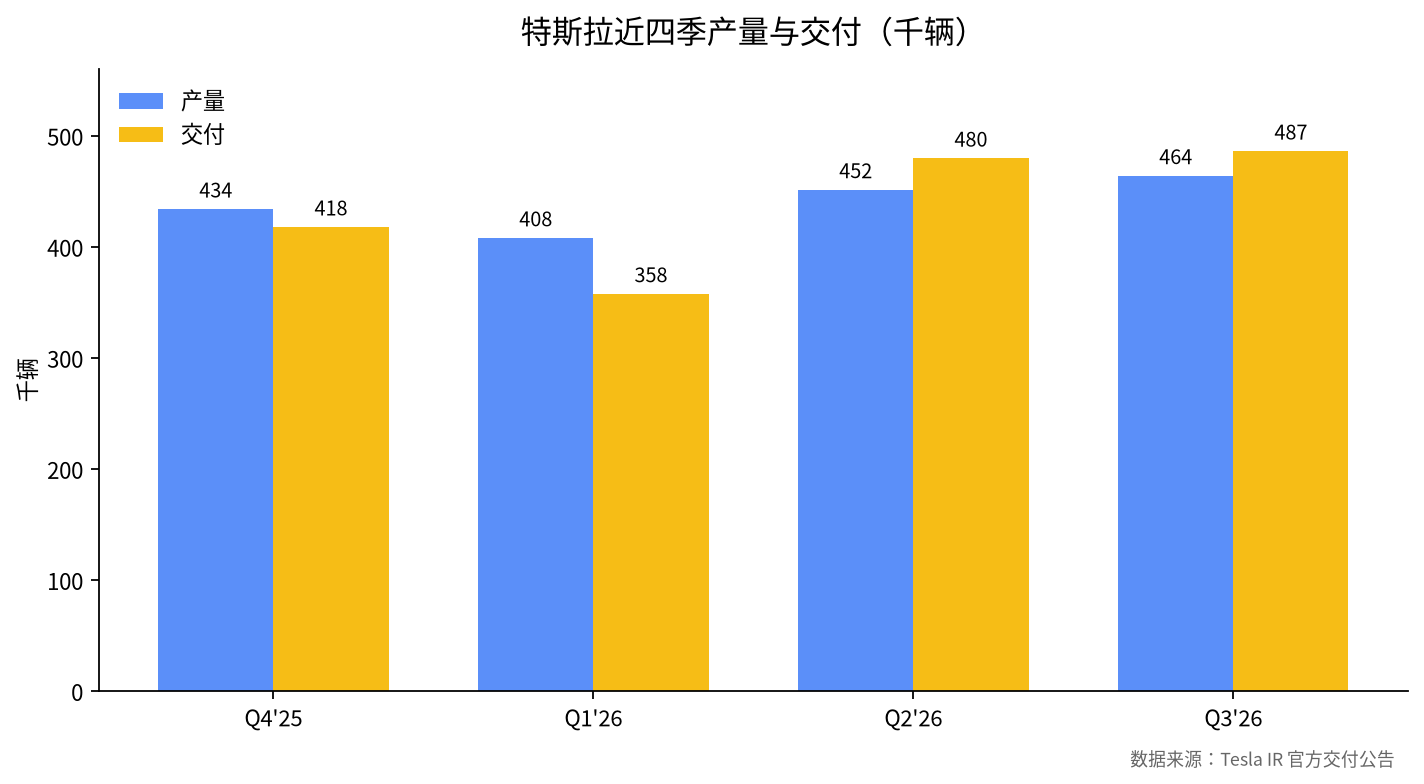
Figure 1. Production and deliveries over the last four quarters, in thousands of vehicles. After a weak Q1, Q2 and Q3 deliveries recovered to about 480,000. Source: Tesla IR.
The rebound says demand, or at least the inventory drawdown, steadied for a while. The earnings report still has to answer whether average selling price kept getting cut by promotions, whether automotive gross margin held, and whether regulatory credits, energy margin, and operating expenses ate the volume improvement.
Tesla's own delivery note says deliveries and energy deployments are only two metrics and cannot, by themselves, stand in for the quarter's financial results. Worth reading again before the print.
3. Energy storage is quieter, and often more real
13.7 GWh in a quarter is already a large business. If automotive ASP and margin are under pressure, the call will get more detailed questions on energy. For a long-term holder, that is the third layer of the value frame—manufacturing, software, and energy. This note does not re-argue that frame. It only says: do not let the Roadster push storage out of the conversation.
A Q3 checklist for long-term holders
This is not a buy or sell signal. It is a list you can tick after the webcast.
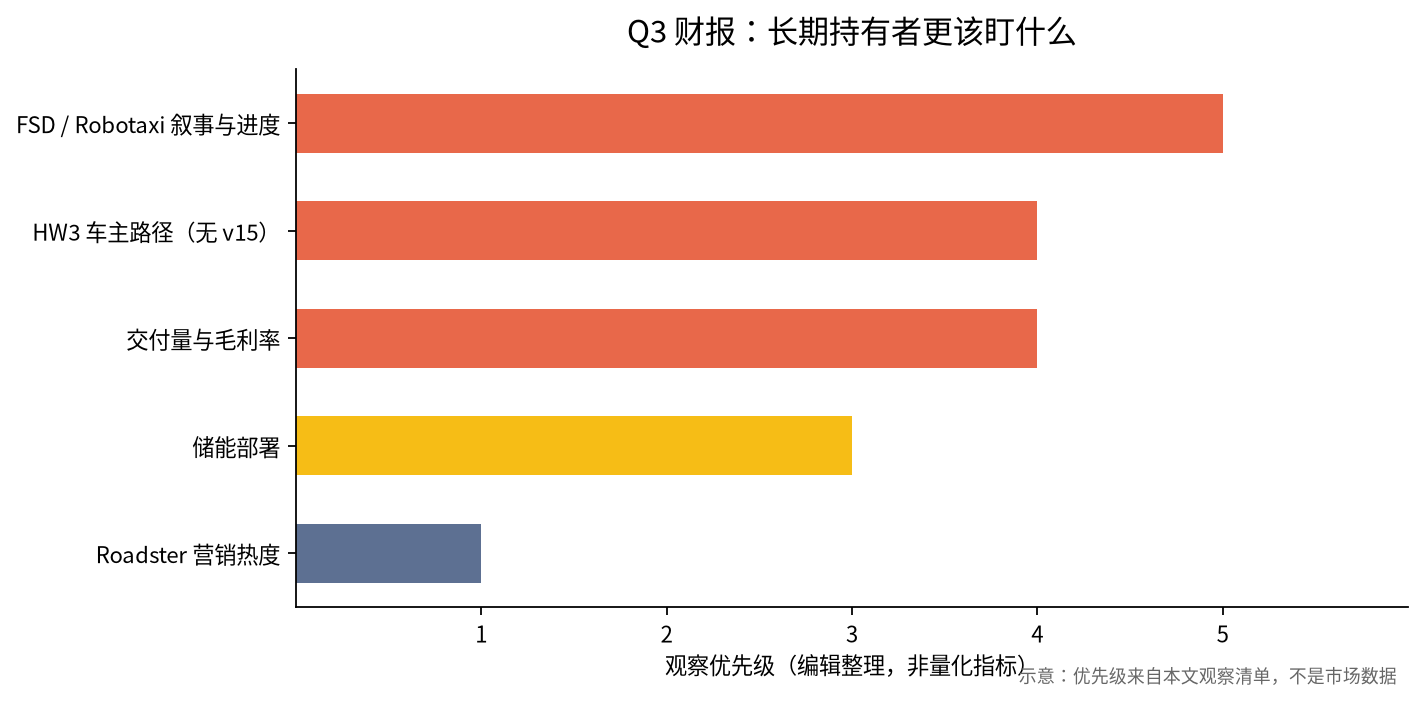
Figure 2. A rough order of attention, compiled for this note, not a score. The higher an item sits, the earlier it belongs in the transcript.
- Did FSD move from demo to something you can audit? Listen for intervention rates, regulatory contact, paid conversion, and where Robotaxi is actually operating. A vague "soon" is worse than last quarter. A city, a mileage figure, or a safety stat is the upgrade.
- Does the HW3 split become a trust tax? v14 Lite is a concession. Missing v15 is structural. If the upgrade path keeps slipping, the software valuation needs a separate discount for the older fleet.
- Automotive gross margin and ASP. About 487,000 deliveries look fine. If margin is still being chewed up by price cuts, the story snaps from "volume stabilized" back to "they cannot make money on it."
- Free cash flow and spending discipline. AI training, Robotaxi, and new vehicles all burn cash. The question is whether the growth spending bought a milestone you can verify.
- Keep the Roadster talk short. If management spends the hour on the flight demo, this quarter is short on hard numbers. A brief mention, then back to FSD and production, sounds like operators.
- Do not let one quarter rewrite the longer frame. Whether manufacturing, software, and energy reinforce each other is a multi-year question. This quarter can change the weights. It should not throw out the frame.
How to review it a week later
After the report, three columns are enough:
- What got confirmed: guidance pinned down by a number or a direct quote.
- What is still a story: anything left at "we're making progress."
- What has to wait for next quarter: especially an HW3 upgrade and Robotaxi as a business.
The Roadster can keep trending. For a position, the October 21 update PDF and the webcast Q&A usually carry more weight.
Sources: Tesla IR, "Third Quarter 2026 Production, Deliveries & Deployments" (2026-10-02), and the same series for prior quarters; Tesla's Q3 2026 earnings schedule; Not a Tesla App and Teslascope on FSD v14.3 Lite and the HW3 / v15 boundary; Reuters, CNBC, TechCrunch, and The Verge on the October 15, 2026 Roadster event.
This is a personal note, not investment advice.